Proper Leash Holding and Configuration
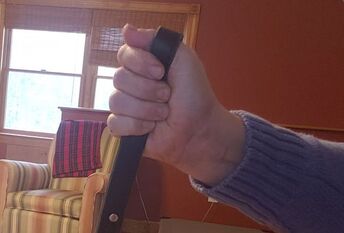
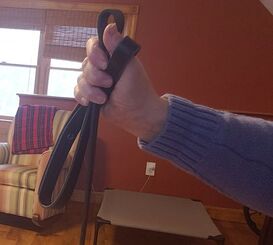
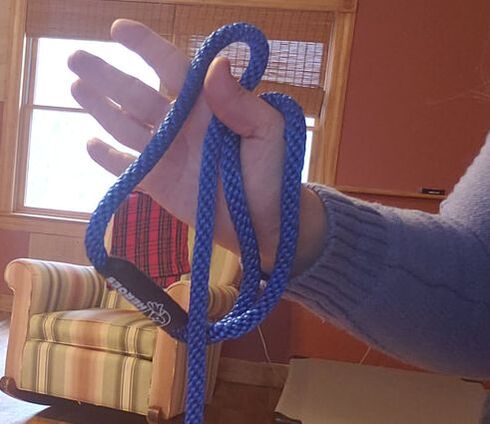
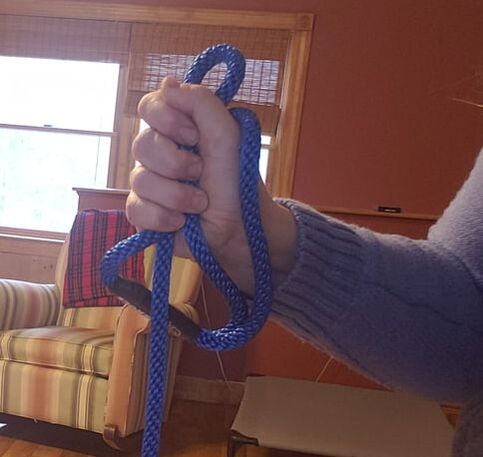
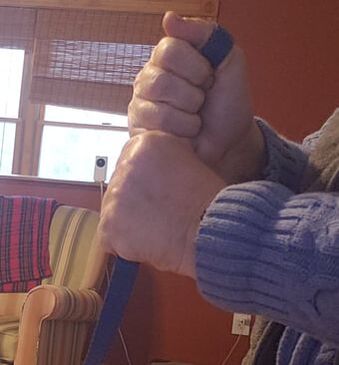
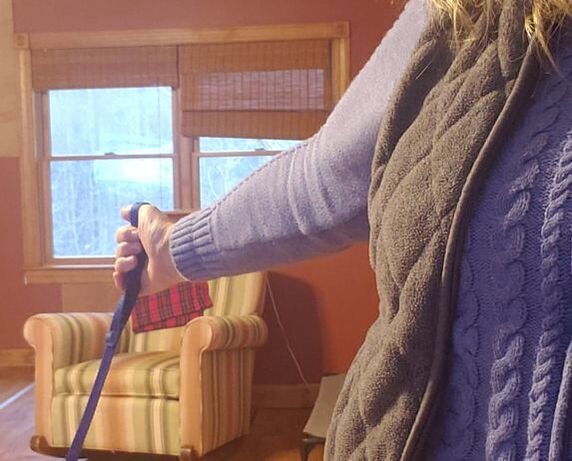
Leashes are a dog's safety net and life line for much of their lives. Many public places are bound by the leash laws of their municipal government. Also, if your property does not have a fence and they are not off leash trained, generally if your dog leaves your property then YOU have probably violated a leash law. Many owners hold the leash casually, in a way that can harm the human, and in a way that can cause the dog to be free where they should not be and where it is dangerous. The topic of our blog today, is the best ways to hold a leash for the safety of both the dog and the dog owner. Your normal 6 ' leather training leash is a great tool for both walking and training your dog. Your grip on a leather leash (also biothane may come in this category too except when wet) is going to be more secure in general. The on a new leash can take about a week to break in. There are also other ways of softening up a new leather leash. The following pictures represent the ways you would normally hold the leash when training. Notice there are two different holds shown, as you sometimes want to leave the leash full out or you may want to reduce the leash length. This usually depends on what exercises you are working on. 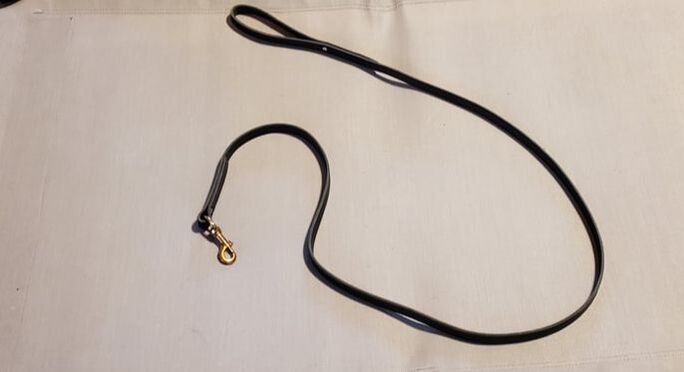 This is a standard 6' leather leash.
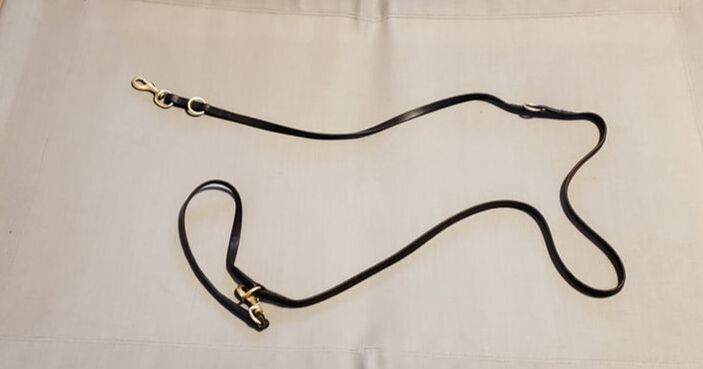
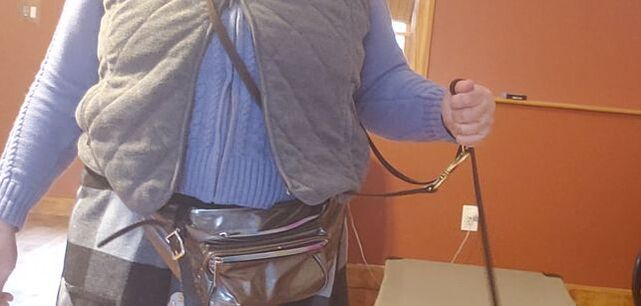
A convertible leash is a leash that you can put into a few configurations due to the hardware used. A convertible leash usually has a clip at each end, and multiple rings attached to it. Some convertible leashes have a sliding ring, which can be more flexible for your use and size. The main ways a convertible leash is used is as regular 6' leash, over the should for more hands free if you have a well trained dog, it can be worn around your waist, and to station or attach your dog to something. The below right picture shows you how to hold it, if you have a dog in training. Even a well trained dog can suddenly lunge on the leash for something unexpected. So use the over the shoulder method of the leash with care and safety in mind.
When you use the transitional leash's nose loop feature, you are usually working on behavioral exercises without giving commands. For this purpose you usually reduce the size of the leash, because the nose loop is not for distance training. If you are using this as a slip leash, you can use and hold it as the two different ways as the more traditional 6' leather leash. 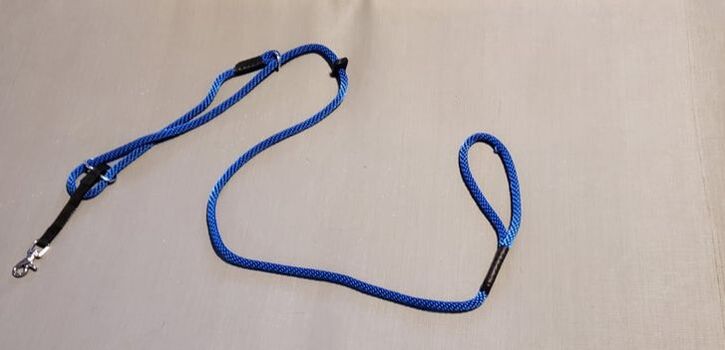 This is a transitional leash that can change into a nose loop or a slip lead.
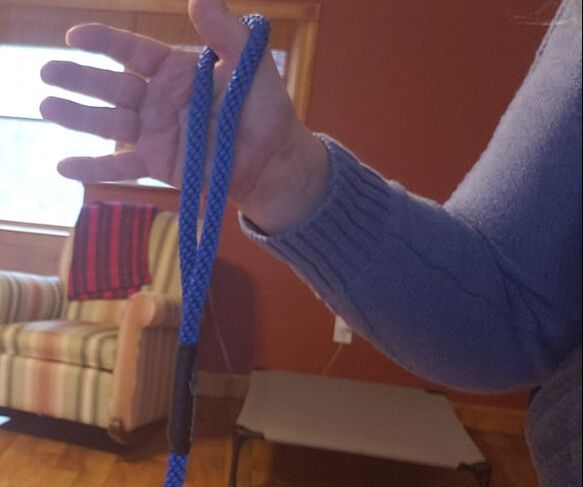
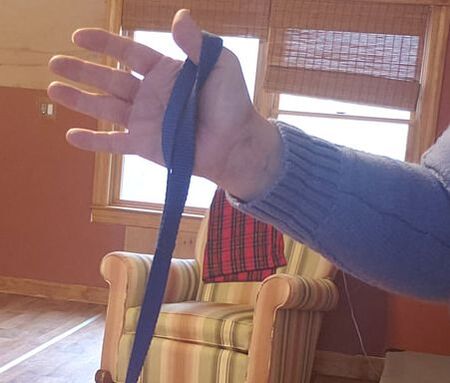
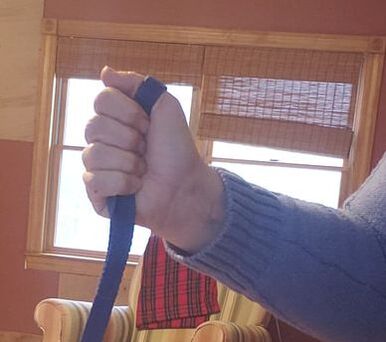
This is a 15' or 20' long line. The typical use for a long line is to train at a distance and also to allow an untrained dog some space to exercise, especially if you don't have a fenced in area available to do that. This line is often used for both moving (come, let's go, advanced heel) and stationary (sit stay, down stay, long place) commands at a distance. The long line can be a challenge to get used to, because it can wrap around your feet if you aren't paying attention, or burn you if your dog runs suddenly. There is also a real chance of an untrained dog pulling you down unless you know how to brace as shown below. 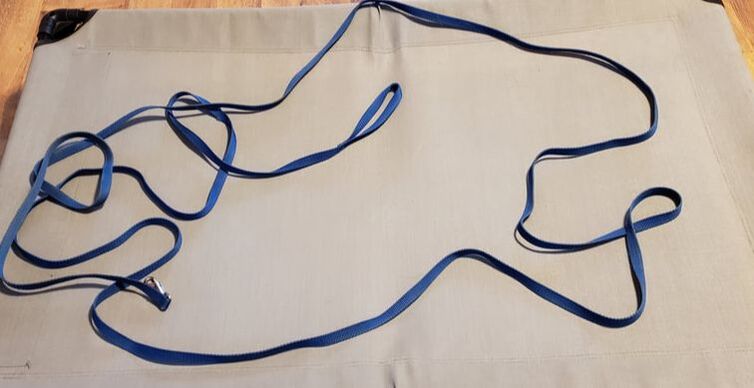 This is a 15' or 20' long line. They do make them in even longer lengths, but typically this is what the beginner dogs use.
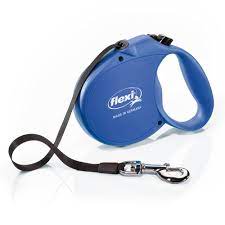
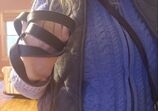
I DO NOT RECOMMEND THAT YOU USE OR HOLD THESE LEASHES IN THESE WAYS. Below I have pictured a leash I don't like to use and ways I don not recommend that you hold a leash. The flexy leash pictured can be a dangerous tool especially with untrained dogs. The handle can get slippery and hard to hold. If you go for the leash portion of this by accident or it gets wrapped around your body, you can get burn or some real damage to your fingers. I prefer the long line to the flexy leash, but some dog trainers do use it in their training. Wrapping your leash around your hand, is an excellent way to really injure your hand badly. Hanging it on your hand, is a good way to loose your leash if something unexpected happens. Finally, not holding the long line braced in front of you, could cause a real shoulder or arm injury.
|






Comments
Post a Comment